How to Write an Obituary
The obituary is one of the most important documents you will need when organizing end of life services for a someone who has passed. Although not a legal document, the obituary is traditionally used as the death announcement of a loved one, and gives important information and details about the viewing or wake, funeral or memorial service. The obituary is often written in multiple versions, and published in multiple places, including in funeral programs, obituary programs other printed memorial materials as well as online and on memorial and tribute websites. This article will help you get started writing the obituary that is right for your family.
Getting Started: Gathering Information
Before you decide what kind of obituary you will be writing, and where it will be published, you will first want to have all information about the deceased in one location. Here are the types of information you may need. You may want to keep the information in one document for easy reference. You can also research obituaries samples for more detailed information.
Information needed for an Obituary
Basic Information
- Full Name, Maiden Name or NickName -- If a nickname was commonly used, place in quotes. If listing a maiden name, place in parenthesis
- Birth Date and Death Date
- Birth Place and Place of Death
- Cause of Death -- This is optional. Stating the cause of death may keep you from explaining the circumstances over and over again.
- Work history, military service information, special hobbies and clubs.(This information is optional)
- Family Information -- This can get very detailed. List spouse, life partner, parents, siblings, children and grandchildren. Decide whether you will also list deceased relatives. Check name spellings if you are unsure. You may not use all of this information, but you should try to get it. Have friends or family members help you obtain all of this information.
Make an Obituary Program...It's Easy
Funeral and Memorial Information
- Date and Time of Viewing
- Date and Time of Funeral and Memorial Service (If services are private, let the public know)
- Where Flowers can be sent
- Preferred Charities for Donations
- Where Donations can be sent
Biographical Sketch Information
- High Schools and Colleges Attended
- Clubs and Organizational affiliations
- Military Service Information (for a Veteran Obituary)
- Church Membership and Religious Organizations
- Hobbies, Interests
- Special Awards and Achievements
Misc. Information
- Photos - Some families choose a recent picture while others use a picture from an earlier time in the deceased life when he or she was younger, perhaps from high school, marriage, or the military.
- Favorite Quotes, Sayings or Memorial Poems
Publishing the Obituary
After you have gathered all of your information, you may want decide where you would like the obituary to be published.
Newspaper Obituary / Death Announcement-- The most common place to publish the newspaper to inform the public of passing of your loved one. Newspaper obituary publishing rules and prices vary greatly, so get guidance from the newspaper or funeral director. Since there is usually a cost associated with publishing the obituary, you may want a short version of the obituary that just lists the most pertinent information. For more information, please see our article on Newspaper Obituaries.
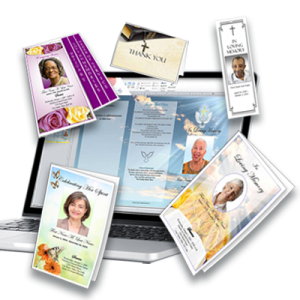
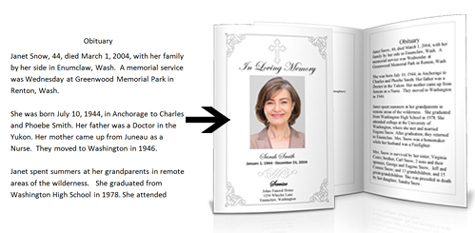
Obituary for Funeral and Memorial Programs -- The obituary can be included in printed handouts that are given out during funeral and memorial service. These obituaries are often read aloud during services, and help make the printed obituary program a treasured keepsake. This version of the obituary can be longer and less traditional, expressing feelings and conveying the personality of the deceased. You can also include a poem or favorite quote or saying to help express feelings about your loved one. For more information, see our section on Funeral and Obituary Programs and our article on writing an obituary for a funeral program
Online Obituary -- There are many different ways you can put an obituary online. Some newspapers will publish your print version online. There are also fully-dedicated websites that will allow you to post obituaries. These websites range in functionality. With some, you can add photos, host a guestbook and many other functions. Onine Obituary sites can be both free of charge, or paid. See our article on online obituaries for more information.
Writing the Obituary
Now that you have all of your information, you are ready to write your obituary. Remember that this will be the one of the final ways that you honor and remember your loved one, so take your time and make sure you write everything that you want to say. If you have a word count to consider, you can always write a shorter version.Your obituary will probably be one or a few of the following:
Short and Consise - (Newspapers and Death Announcements)
Longer and Traditional - (Used in some newspapers)
Longer and Non-Traditional - (Used for other printed memorial materials, and may also be read aloud)
Here is a general guide that you can follow to write your obituary. This guide is listed "per paragraph". You can pick and choose which kinds of paragraphs you will need. For more information and examples see our article "Sample Obituaries" and "Obituary Examples".
Paragraph: List Full Name, Age, Date and Place of Death
Paragraph: - List Family Members. This can just be spouse, parents or immediate family
Paragraph: - Give a brief biographical history, including birth place and where he or she grew up. You can tell the schools that were attended.
Paragraph: -- Can list more details about jobs, special awards, accomplishments.
Paragraph: - (For Longer Obituary) Give Information about church and religious affiliations and clubs and organizations that the deceased was a part of. You can also elaborate on hobbies and interests.
Paragraph: (For Longer Obituary) – More detailed information about family. This paragraph can contain extended family members.
Paragraph: (For Longer Obituary)- Can give information about his personality, quirks, funny stories, etc.
Paragraph: (For Obituary Published in Newspaper)- give accurate information regarding visitation times, funeral services, memorials, mass services etc.
Paragraph: (For both long Obituary and Newspaper) Tell of any charities and donations that can be given on behalf of the deceased
You might also want to mention any people or groups that you wish to thank publicly for care given to the deceased. You could also include special poems or prayers
There are so many styles, and tones that an obituary can be written, it is almost impossible to list them all. You should look at obituary samples to get an idea of how you would like the obituary to read.